
Leak Detection and Repair
Finding the leak is most of the job. Once we know exactly where water is escaping, the repair itself is usually simple.
We work from the outside in: confirm there is a leak, split the system into parts, then narrow it to one spot before anything gets opened.
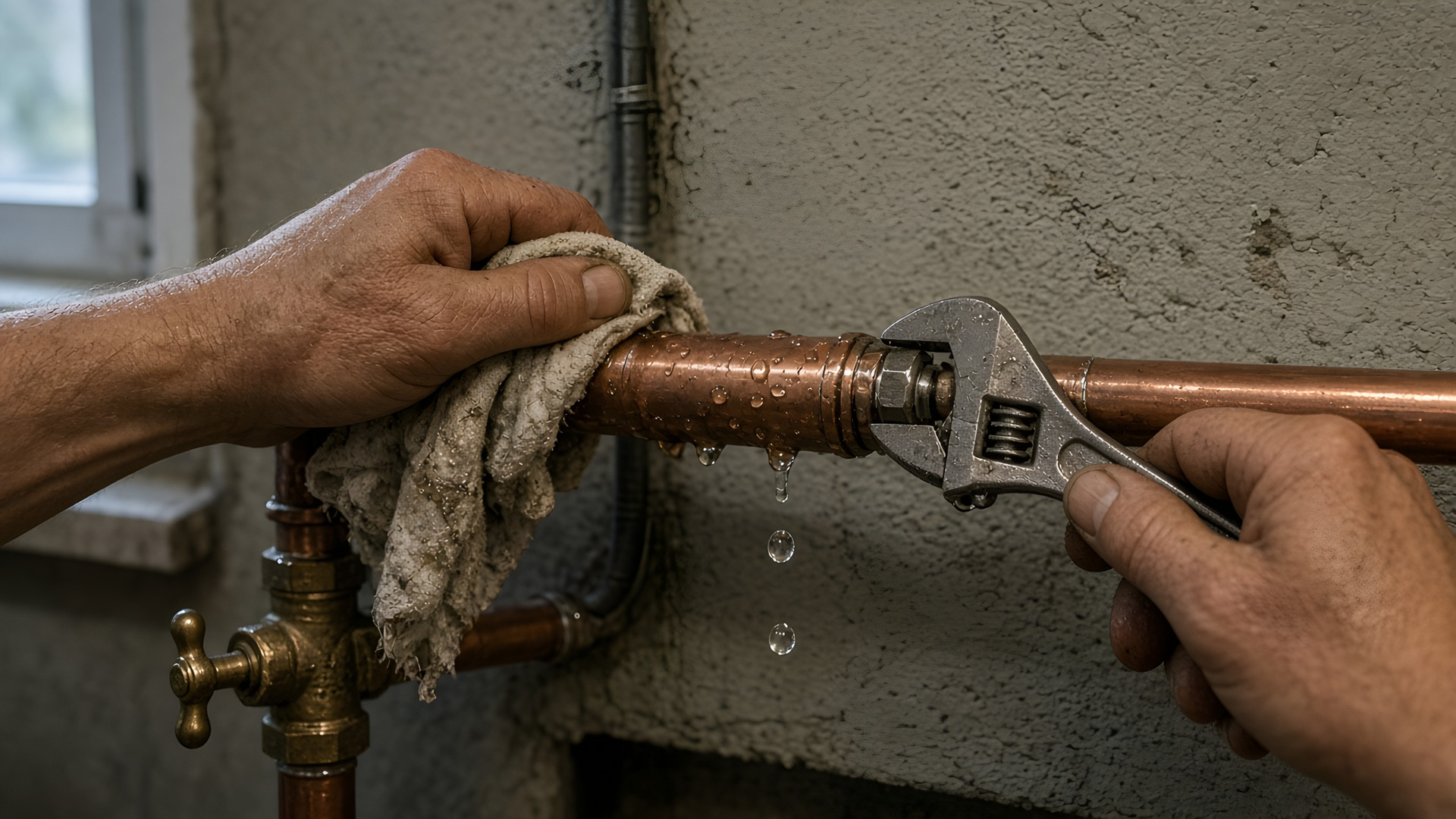
Use This Page If
- You can see a stain, a drip or a soft spot
- The meter moves with every tap closed
- The well pump runs when nothing is on
- You hear water running inside a wall
- A floor feels warm over a slab
See How We Track a Leak Down
- 1We confirm water is escaping
A meter test or a pressure test on the supply lines tells us whether there is a leak and roughly how large.
- 2We split the system
We close valves to separate the hot side, the cold side, sprinklers and outside lines, so we know which run is leaking.
- 3We narrow it to a spot
Moisture readings, a thermal camera on hot lines and listening along the pipe bring us to a small area.
- 4We open as little as possible
When a wall or floor has to open, we cut one small, clean access in the right place.
- 5We repair and retest
We fix the joint or replace the section, then pressure test again before anything is closed up.
Know What Moves the Price
- Finding it
- A visible drip takes minutes. A leak under a slab or behind tile takes longer to locate.
- Access
- Crawlspace and unfinished basement leaks are simpler to reach than finished walls.
- Repair or reroute
- Running a new line around a leaking section can cost less than opening a slab.
- Pipe condition
- Old galvanized with several weak spots may be better replaced than patched.
- Buried lines
- A well line or yard line leak may need digging to reach.
Know the Leaks We Find Most Around Vernal
Rusted galvanized at threaded joints in older homes. Pinholes in copper, which hard water and high pressure both make worse. Worn toilet supply lines and wax rings. Shower valves leaking inside the wall.
On ranch properties, add buried poly lines between the well and the house that cracked when the ground froze.
Get Answers Before You Call
Can high water pressure be the reason joints keep leaking?
Yes. Pressure above what fixtures are built for strains every joint and valve. We check it with a gauge, and a pressure reducing valve brings it back to a safe range.
Do you repair leaks under a concrete slab floor?
Yes. Depending on the spot and the pipe, we either open the slab at the leak or run a new line through a wall or ceiling and abandon the old one.
What does a leak test tell me when nothing looks wet?
It tells you whether water is leaving the pipes at all. A small leak can run inside a wall for months before it shows. If the test is clean, you can stop wondering.
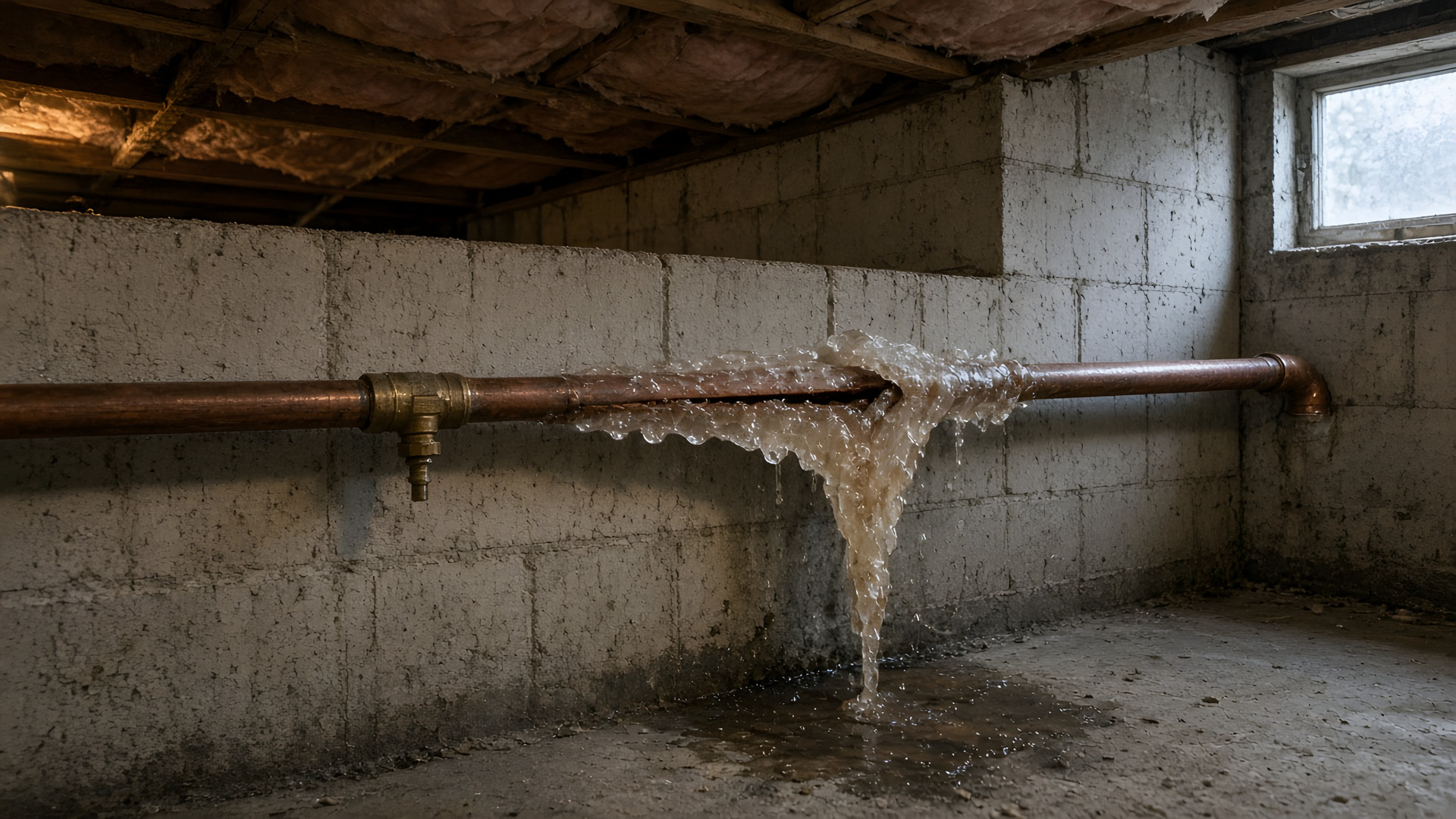
Talk It Through With a Plumber
Describe what you see and where. We will tell you what it likely is and what to shut off while you wait.
Call (435) 417-3556