
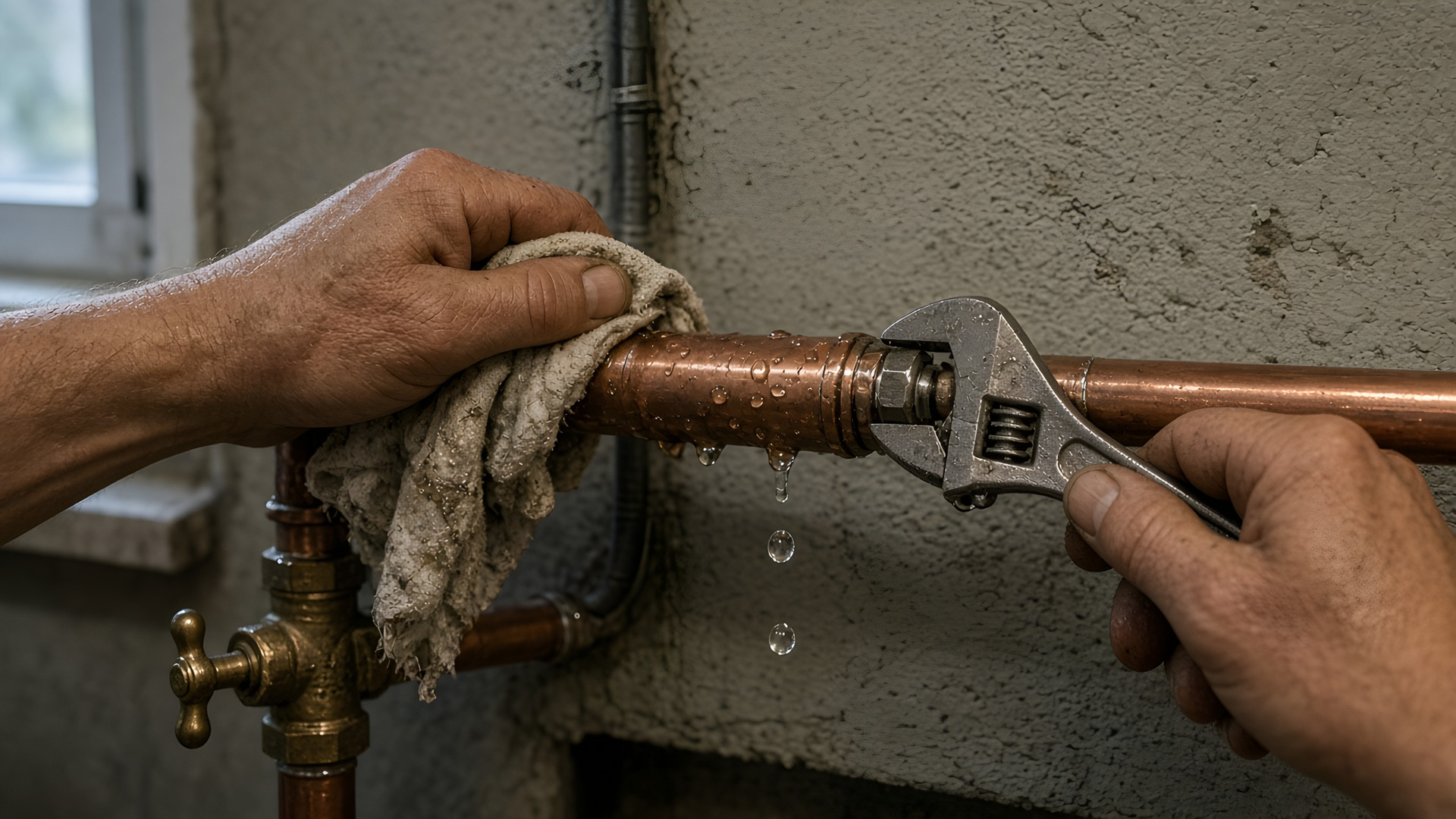
Leaks, Wet Spots and a Meter That Keeps Turning
Some leaks announce themselves with a drip. Most stay hidden behind drywall, under a floor or in a crawlspace until they leave a stain, a soft spot or a higher water bill.
The sooner a leak is found, the less there is to repair once it is fixed.
Watch for These Signs
- A brown ring on the ceiling under a bathroom
- Paint that bubbles, or drywall that feels soft near a fixture
- A musty smell in a closet or under a sink
- A warm spot on a tile floor, which can mean a hot line leaking under the slab
- A water bill that climbs with no change in how you use water
- A well pump that kicks on when no one is running water
Check the Meter Yourself
This takes about twenty minutes and tells you whether water is leaving the pipes.
- 1Turn everything off
Make sure no faucet, toilet, washer, dishwasher or sprinkler is running.
- 2Read the meter
Lift the lid on the meter box near the street and write down the reading. Many meters also have a small triangle or dial that spins when water moves.
- 3Wait and read again
Use no water for twenty minutes, then read it again.
- 4Compare the two
If the number changed or the small dial turned, water is leaving the pipes somewhere. On a well, listen instead for the pump starting with nothing open.
Know the Usual Leak Spots in Older Basin Homes
Galvanized steel supply pipe rusts from the inside, and hard water speeds that along. Leaks tend to start at the threaded joints. Copper lines develop pinholes, and toilet supply lines and wax rings give out with little warning.
On ranch properties, a leak can also sit in the buried line between the well and the house. Sometimes the only clue is a patch of ground that stays green through a dry spell.
Get Answers Before You Call
Is a slow drip under the kitchen sink worth fixing right away?
Yes. A slow drip keeps the cabinet floor wet, and particle board swells and starts to grow mold within weeks. Most under-sink leaks are a loose trap nut, a worn supply line or a failing angle stop, and each is a short repair.
Can a hidden leak be found without opening up the walls?
Usually we can narrow it down first by isolating lines, checking pressure and taking moisture and thermal readings. Then any opening we make is small and in the right place.
What should I do the moment a ceiling starts to drip?
Shut off the main water valve, turn off power to any light near the wet spot, set a bucket under it and call. If the ceiling is sagging, a small hole at the lowest point lets the water drain into the bucket in a controlled way.
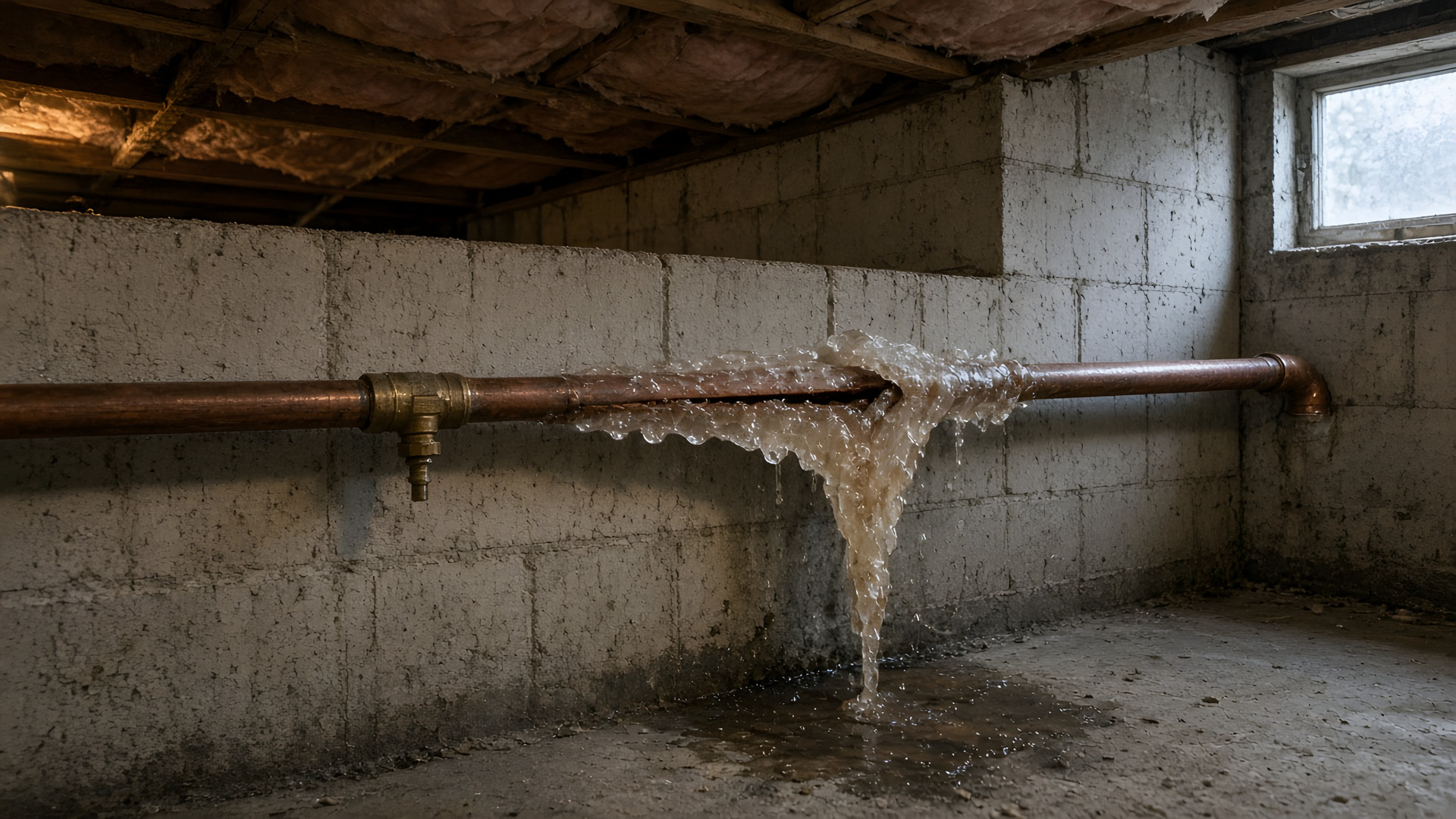
Talk It Through With a Plumber
Describe what you see and where. We will tell you what it likely is and what to shut off while you wait.
Call (435) 417-3556